Stakeholder Management Framework
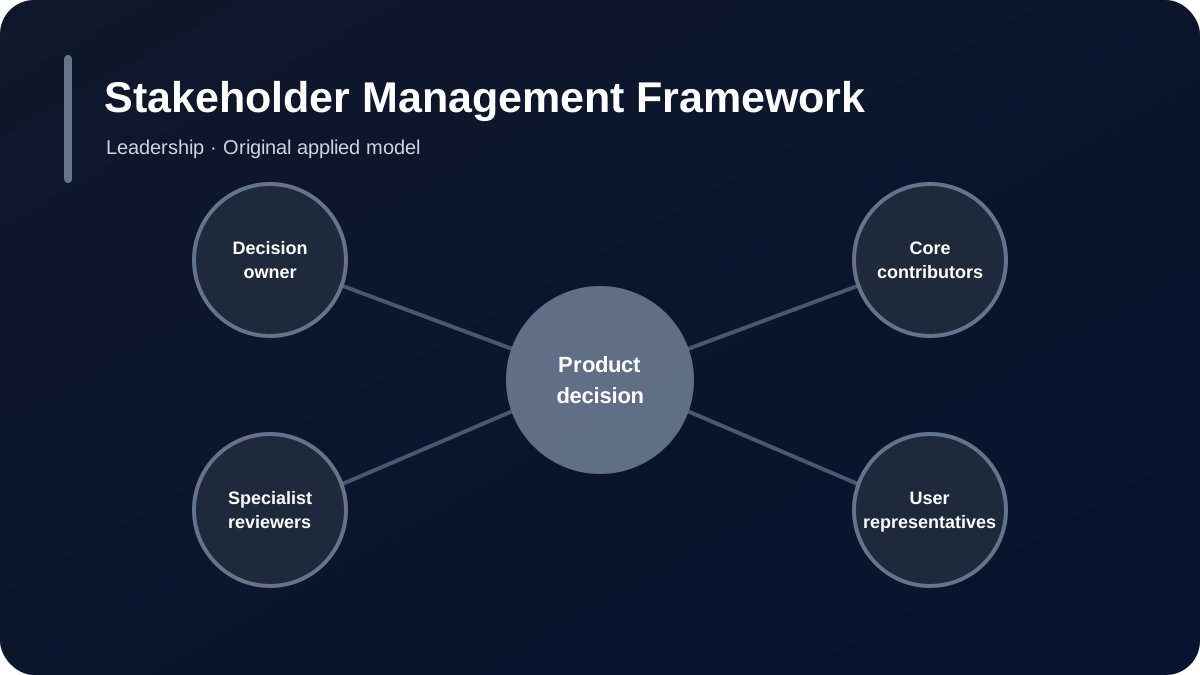
A stakeholder operating model based on interest, influence, contribution, decision authority, information needs, participation moments, and escalation paths.
Use it when: A product spans multiple functions or organizations.
Primary output: Stakeholder map
Core principle: Frameworks support judgment; they do not replace evidence or accountability.
Why it exists
The problem it solves
Stakeholder maps often categorize people but do not clarify decision rights, contributions, communication needs, conflicts, or participation.
Ownership and attribution
Original applied model
Developed from recurring product-leadership practices and portfolio experience.
Use guidance
When to use it
- A product spans multiple functions or organizations.
- Decision ownership and participation are unclear.
- Stakeholder conflict repeatedly delays delivery.
- Regulated or operational reviews require specialist involvement.
Context matters
When not to use it
- As a political ranking exercise.
- When the map will not affect engagement behavior.
- When stakeholders are excluded to avoid disagreement.
Method
Inputs and process
The framework is designed to produce decisions and learning, not simply artifacts.
- 01
Identify
List decision owners, contributors, reviewers, informed groups, and user representatives.
- 02
Characterize
Assess interest, influence, contribution, authority, information needs, and impact.
- 03
Design participation
Define when and how each stakeholder contributes.
- 04
Clarify decisions
Document who recommends, decides, reviews, executes, and is informed.
- 05
Plan communication
Set message, format, cadence, owner, and feedback channel.
- 06
Manage conflict
Expose competing objectives, trade-offs, escalation, and resolution paths.
- 07
Review
Update the model as scope, risk, and organization change.
Decision quality
Key decision points
Who owns the decision?
Whose evidence is necessary?
Who can block or materially change the outcome?
Where is specialist review mandatory?
How will disagreement be resolved?
Outputs
What it produces
- Stakeholder map
- Decision-rights model
- Engagement plan
- Communication plan
- Conflict and escalation log
- Review cadence
Success
How it is measured
- Decision turnaround
- Stakeholder attendance and contribution
- Unresolved blockers
- Rework from late input
- Communication effectiveness
- Alignment confidence
Skills
What it demonstrates
Portfolio application
How I apply it
I use this approach in multi-function enterprise delivery, multi-agency Smart City work, regulated Life Sciences workflows, and roadmap alignment.
Common pitfalls
How the framework is misused
- Equating seniority with contribution.
- Inviting everyone to every meeting.
- Consulting stakeholders after decisions are effectively made.
- Leaving decision ownership ambiguous.
- Using communication as one-way status reporting.
Interview preparation
Discussion prompts
- How do you handle a powerful stakeholder who disagrees?
- How do you define decision rights?
- How do you prevent stakeholder overload?
- When do you escalate?
References
Attribution and sources
This framework is presented as an original or adapted portfolio model. Any future external influences will be documented here.