
Product Strategy Canvas
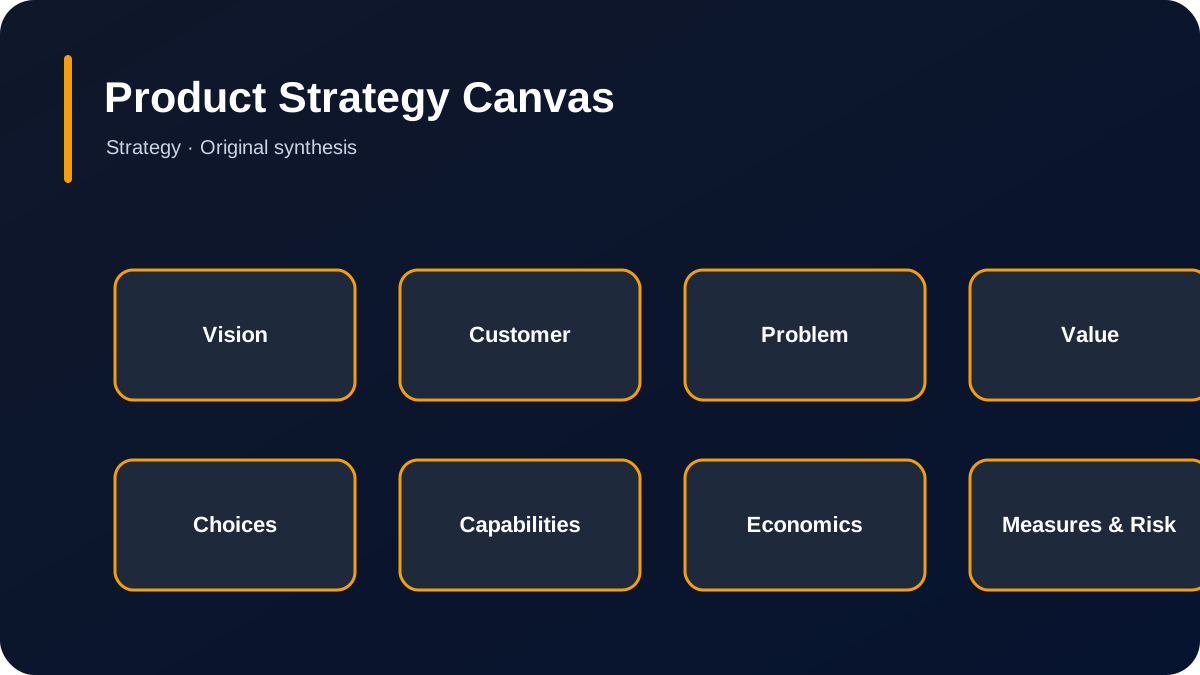
A one-page strategy model connecting vision, target customer, problem evidence, value proposition, differentiation, choices, capabilities, economics, measures, and risk.
Use it when: A product or product area needs strategic alignment.
Primary output: One-page strategy
Core principle: Frameworks support judgment; they do not replace evidence or accountability.
Why it exists
The problem it solves
Strategy becomes a list of ambitions when teams do not make explicit choices about customers, value, differentiation, capabilities, and what they will not pursue.
Ownership and attribution
Original synthesis
Developed from recurring product-leadership practices and portfolio experience.
Use guidance
When to use it
- A product or product area needs strategic alignment.
- Teams are preparing a major investment or repositioning.
- Roadmap debates reveal unclear strategic choices.
- Leaders need a concise strategy narrative.
Context matters
When not to use it
- As a substitute for underlying research and analysis.
- When leadership is unwilling to make exclusions.
- When every statement remains generic enough to fit any product.
Method
Inputs and process
The framework is designed to produce decisions and learning, not simply artifacts.
- 01
Vision
Describe the future state the product aims to create.
- 02
Target customer
Define who has the important problem and context.
- 03
Problem and evidence
State what is not working and what proves it matters.
- 04
Value proposition
Explain the customer benefit and reason to choose the product.
- 05
Differentiation
Clarify the distinctive advantage or system of advantages.
- 06
Strategic choices
State what the product will and will not do.
- 07
Capabilities and economics
Identify required capabilities and how value is captured.
- 08
Measures and risks
Define progress signals, success measures, assumptions, and threats.
Decision quality
Key decision points
Which customer segment matters most?
What problem is important enough to solve?
What will we deliberately not pursue?
Which capability creates defensibility?
What assumption could invalidate the strategy?
Outputs
What it produces
- One-page strategy
- Strategic-choice statement
- Capability gaps
- Outcome measures
- Risk and assumption register
- Roadmap themes
Success
How it is measured
- Strategic alignment
- Choice clarity
- Roadmap traceability
- Outcome movement
- Differentiation evidence
- Assumption validation
Skills
What it demonstrates
Portfolio application
How I apply it
I use strategy canvases to create shared language before roadmap planning and to connect customer problems, product missions, capabilities, and measurable outcomes.
Common pitfalls
How the framework is misused
- Writing slogans instead of choices.
- Listing every customer as a target.
- Confusing features with differentiation.
- Ignoring required capabilities.
- Leaving risks and exclusions unstated.
Interview preparation
Discussion prompts
- What makes a product strategy actionable?
- How do you decide what not to do?
- How do capabilities influence strategy?
- How should strategy connect to the roadmap?
References
Attribution and sources
This framework is presented as an original or adapted portfolio model. Any future external influences will be documented here.